- Nov 10, 2025
3 Things That Helped Me Recover From Burnout
- Jade Niskanen
- Yoga & Movement, Breathwork & Nervous System
In 2023, I experienced the worst burnout of my life. My symptoms were constant exhaustion, irritability, disinterest in everything I usually loved, overwhelm, and a deep disconnection from my body and purpose. The “weird” thing was, I was unemployed. I remember thinking, how can you get burnout if you’re not even working?
Fun fact: you absolutely can.
I kept dismissing every sign and was gaslighting myself into an attitude of “just keep going.”
My day-to-day looked like this
Wake up, roll out of bed to make coffee, crawl back into bed and apply for hundreds of jobs… Cry, write another cover letter and finally go to sleep and repeat it all the next day. That was my life for eight months and in those months, I got exactly one interview.
My thoughts looped endlessly:
“I have an MSc and I can’t even get a job. It should be easier than this. Maybe I’m just not good enough.” I honestly felt like a failure and like I was “wasting” my expensive degrees.
One morning I looked in the mirror and couldn’t recognise the ghost staring back. That’s when it hit me.. this is burnout, and I’m really not okay. The first step to recovery was accepting that.
1. Acceptance: Stop Pretending You’re Fine
I had to acknowledge that I was burnt out, even though I didn’t “deserve” to be. Burnout isn’t just about workload, it’s about emotional exhaustion, chronic stress, and being in survival mode for too long. Once I stopped fighting it, I could finally start process of healing and feeling better.
Try this:
Sit down somewhere quiet and close your eyes if that feels safe. Notice your sitting bones anchoring against the ground (or chair, or bed). Gently create length in your spine and try and stack your shoulders over your hips. Take a deep breath in through your nose, follow your inhale’s journey, and slowly exhale a sigh through your mouth. Repeat this for three breaths.
Notice how your body is feeling, maybe scanning it through starting from the soles of your feet and working your way up to the crown of your head. Then bring your attention to your mind and any feelings or thoughts that might be popping up. Don’t try and change them or judge them, just notice them. You can either voice them quietly or write them down.
This moment of honesty with myself is what helped me kickstart my burnout recovery.
2. Create Safety in Your Body First
I stopped applying for jobs completely because that was my biggest trigger. My nervous system needed a break from feeling fried (that’s honestly what it felt like). My brain felt fuzzy and I could feel this weird buzzing in my spine. This was my body saying, enough is enough.
The next morning, I dragged myself to the sauna and ice dip. The air was crisp, the sky was a soft pastel pink. As I stepped into the ice-cold ocean, I felt silence. For the first time in months, I didn’t think about my future, or job applications, or being a “failure.” I was just present. Gazing at the sky, feeling the cold water kiss my skin, and the breath in my lungs.
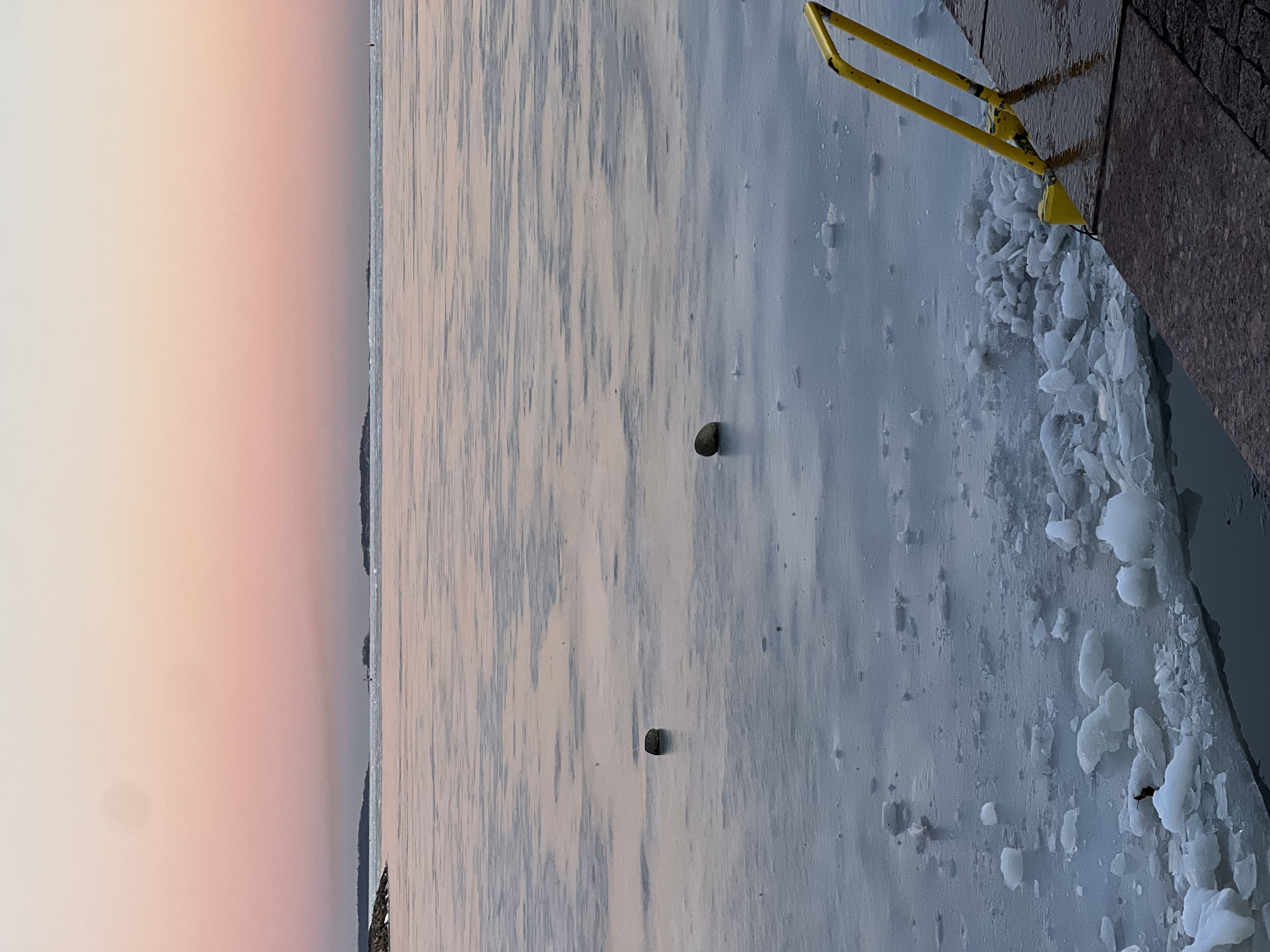
Now, I’m not saying go throw yourself in cold water. I’ve been using cold exposure therapy as a tool for stress and nervous system regulation for years. I know how to do it safely, how to breathe in the water, and how to slowly warm myself after.
I used this as a reset because I know I enjoy it, it fills my cup, and yes, the dopamine boost definitely helps. But it might not fill your cup. The point isn’t what you do, it’s how you help your body feel safe again. Cold exposure, breathwork for stress relief, and slow mindful movement became my anchors. They reminded my body what safety felt like.
Try this:
When you feel anxious or on edge, practice Dirga Pranayama (three-part breath).
Inhale and expand your belly like a balloon.
Keep inhaling and expand into your ribs and chest.
-
Exhale slowly, letting your chest lower, ribs draw in, and belly soften.
Repeat for as many rounds as you need. Start with five if you want an amount to focus on. One full cycle of breath is an inhale and an exhale.
This is a gentle grounding breath-work practice to help calm anxiety and regulate your nervous system (guided audio at the end of the blog).
3. Make Your Wellbeing Your Priority
I started treating rest, nourishment, and self-care as seriously as I had treated job applications. Healing became my new full-time focus.
The thing about self-care for burnout recovery is that it snowballs. Once you start small, you start to feel a little better, and as you feel better, you naturally begin adding more small things into your “toolbox.”
Let me make one thing clear: start small. Your nervous system is probably in survival mode, so you don’t want to overload it by taking on too much at once. One gentle step is enough. Maybe it’s a short breathwork session, or jotting down a few thoughts in a journal for burnout healing.
When I decided to start practicing yoga for burnout recovery again, I didn’t jump into full flows or long sessions. I literally just stood on my mat and that was it. I needed to remind my body that it was safe to be there again.
Over time, those tiny moments of showing up built trust. Slowly, I began to move again, to breathe deeper, and to feel like myself.
Try this:
Yoga poses I used for burnout recovery or when I'm feeling anxious / overwhelmed:
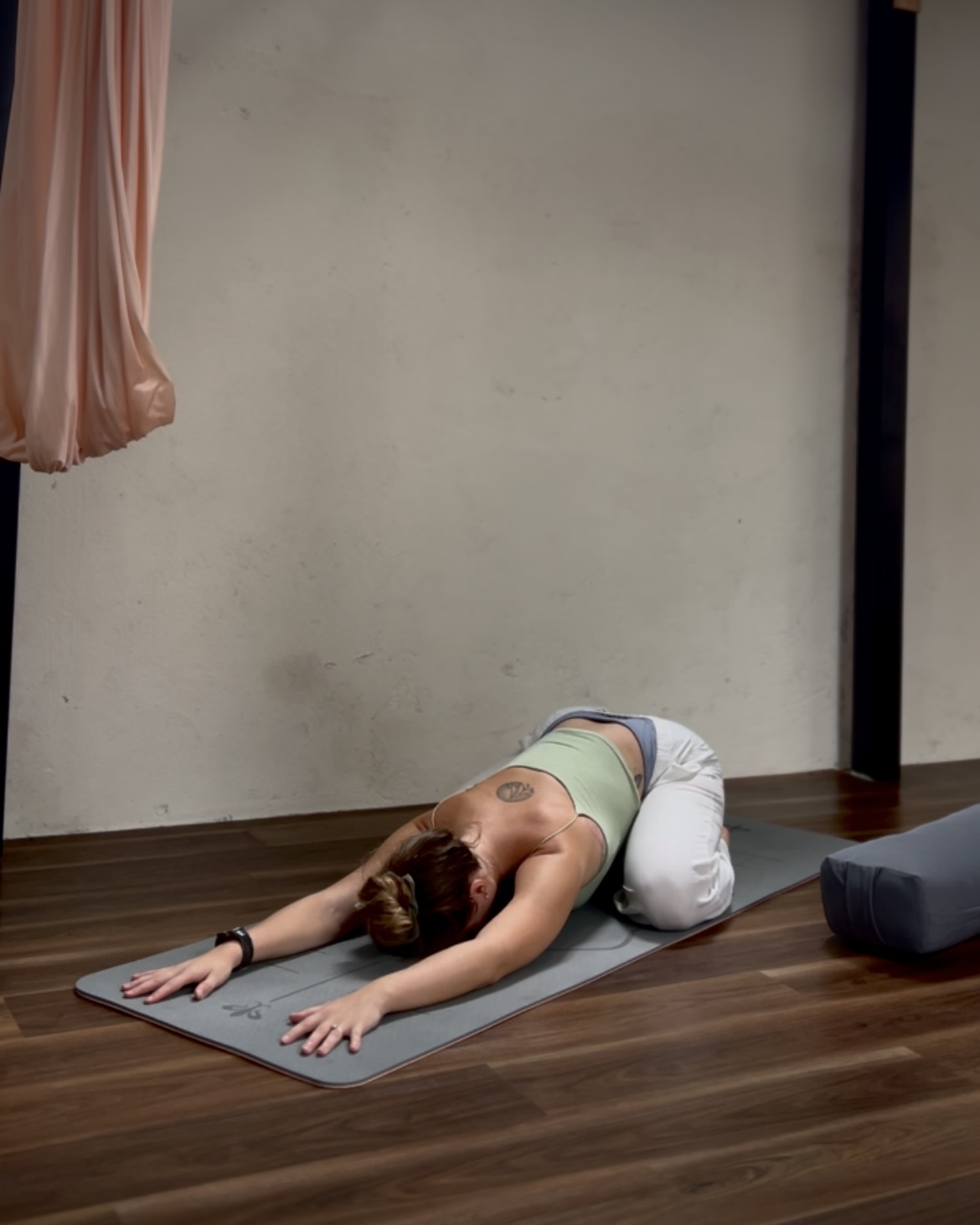
• Balasana / Child’s Pose – 5 breaths.
Option to bring arms by sides, between legs or bring bolster (pillow or 2) between legs & chest.
Child’s Pose can be a deeply grounding shape that encourages rest and soft breathing. From tabletop, bring your big toes together and take your knees as wide or as close as feels comfortable for your body. If your belly or chest feels compressed, widen your knees a little more to create space.
Rest your chest toward the mat, a bolster, or folded blankets for support. You can place a cushion or block under your forehead to make it more comfortable.
If there is any pain or pressure in your knees, try placing a rolled blanket behind them or come into a seated forward fold instead. This offers a similar sense of calm without strain.
Allow your shoulders to relax and feel your breath move into your back and ribs. With every exhale, let yourself soften a little more into the support beneath you.
This pose gently lengthens the spine, opens the hips, and invites the breath to slow down naturally. It’s less about how far you fold and more about how supported and safe your body feels in the shape.
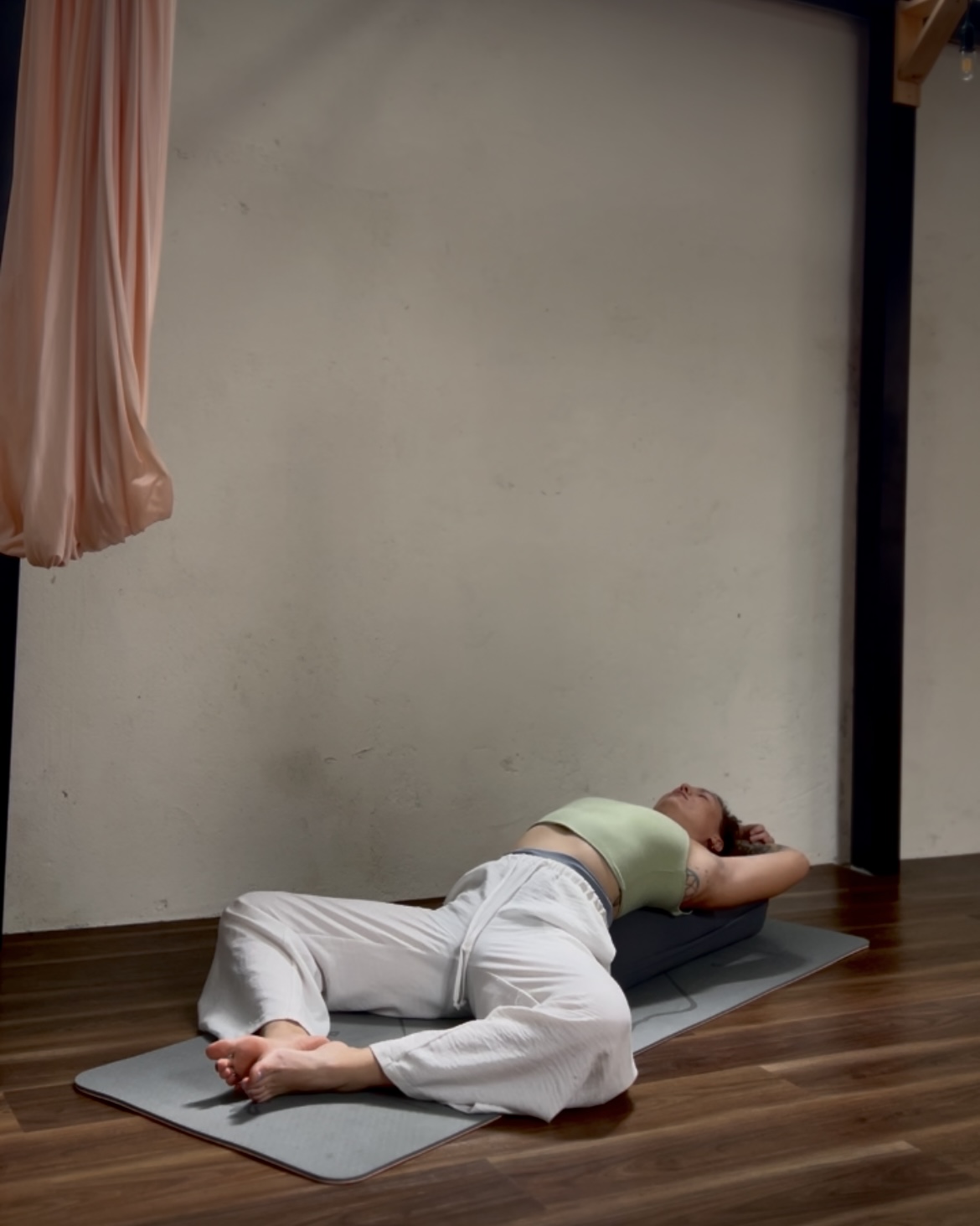
• Supta Baddha Konasana / Supported Heart Opener (bolster under chest) – 1–2 minutes
This restorative pose opens the front of the body and allows the chest and abdomen to expand naturally as you breathe. Sit in front of a bolster or a few stacked pillows and bring the soles of your feet together, letting your knees fall open into a relaxed butterfly shape. Support your thighs with cushions or folded blankets if they hover or feel tense.
Slowly recline back so the bolster supports your spine from the lower back to the back of your head. Let your arms rest where they feel comfortable: palms open beside you, or, if you want a deeper chest opener, reach your arms overhead and hold opposite elbows.
If you notice any pinching in your lower back or shoulders, adjust the height of your support or move your arms closer to your sides. The goal is to feel spacious but supported, not stretched to your limit.
You might feel a gentle opening through your chest, ribs, and inner thighs. Allow your breath to flow freely, softening the belly and letting each inhale lift your ribs naturally.
Stay here for a few minutes, focusing on the sensation of your body being fully held and supported. This shape can help counteract the forward rounding from sitting and subtly invite the body to relax into openness.
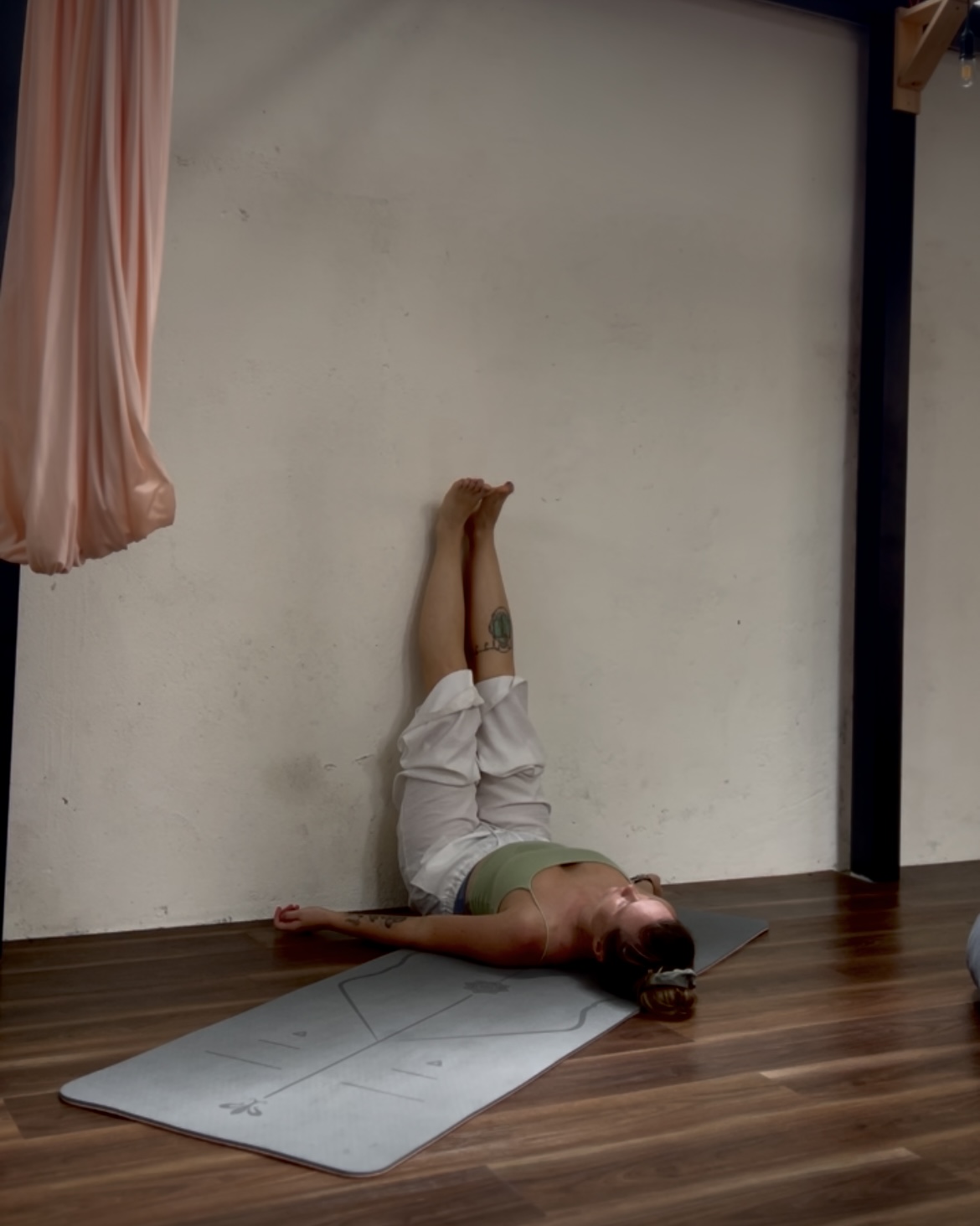
• Viparita Karani / Legs Up the Wall – 3 minutes
This pose gently reverses the usual pull of gravity and can feel deeply calming for the body. It allows blood and lymph to flow from the legs back toward the heart, which may help reduce heaviness or swelling in the feet and legs after long periods of standing or sitting.
Sit sideways next to a wall with one hip close to it, then gently swing your legs up as you lower your back to the floor. Your sitting bones can rest a few centimeters away from the wall to give your hamstrings more space. You can rest your arms wherever they feel comfortable or place a small cushion under your hips for extra support.
If your hamstrings feel tight or your lower back is uncomfortable, try the same position with your calves resting on a chair instead of the wall. This variation can make it easier to stay relaxed for longer.
As you settle, notice the gentle cooling sensation in your legs and the slow rhythm of your breath. Soften your jaw, shoulders, and belly. This pose encourages a quiet, restful state and helps your body and mind slow down together.
Stay for a few minutes or as long as it feels comfortable, allowing your breath to flow naturally.
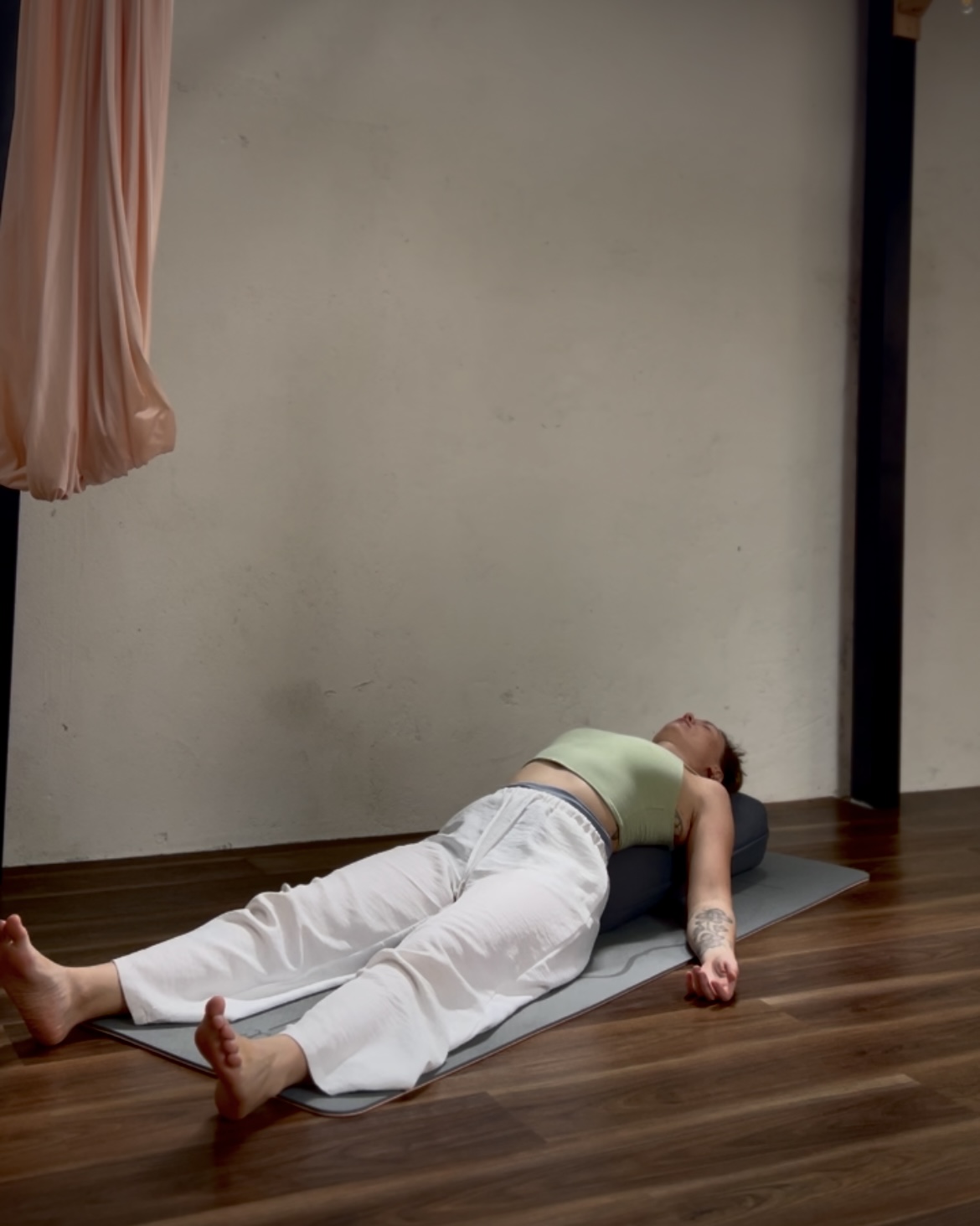
• Savasana with bolster either under back, knees or both, for as long as you need to.
Focus on soft breathing and letting your body be held by the ground/pillow.
This resting pose is where everything you’ve practiced has a chance to settle. Lie back and let your body be fully supported. You can place a pillow or bolster under your knees to ease tension in your lower back, or along your spine if you prefer a light lift through the chest.
Let your legs fall open naturally and your arms rest a little away from your body with palms facing up. If your lower back feels tight, bend your knees and rest the soles of your feet on the mat. If your head feels tilted back, add a small cushion under it so your neck feels long and neutral.
Take a few deep breaths and feel the weight of your body being held by the ground. Notice the subtle rhythm of your breath and the space it creates between thoughts.
You might sense warmth in your hands or a quiet heaviness in your limbs as your body releases effort. Stay here for as long as you like, giving yourself full permission to rest.
Final Thoughts
My recovery didn’t happen overnight. It was slow, messy, and deeply human. But little by little, I began to feel at home in my skin again. I learned that burnout doesn’t mean failure, it’s your body’s way of begging you to stop, to rest, and to listen.
As I reconnected to my body and my breath, my sense of purpose returned too. It became clear that what I truly wanted was to help others do the same: to guide them back into their bodies, their calm, and their truth, to help them feel at home in their skin.
If you’re in that space right now, please know there’s nothing wrong with you. You’re tired, and tired bodies deserve kindness, not shame. If you’d like some gentle support, I created a free breath-work practice for burnout to help you calm your nervous system and reconnect with yourself.
Dirga Pranayama – Three-Part Breath Practice Audio.
You don’t have to rush your healing. When you’re ready, the 4-week Reignite journey is there to help you rebuild energy and self-trust through movement, breath, rest and reflection.
If you’re craving something more personal, you can choose the version that includes a 1:1 session. A space to talk, reflect, and receive guidance that meets you where you are.
Love,
Jade x
Membership
Ready for more gentle strength and grounding? Your membership is just a click away. First 7 days are free.